

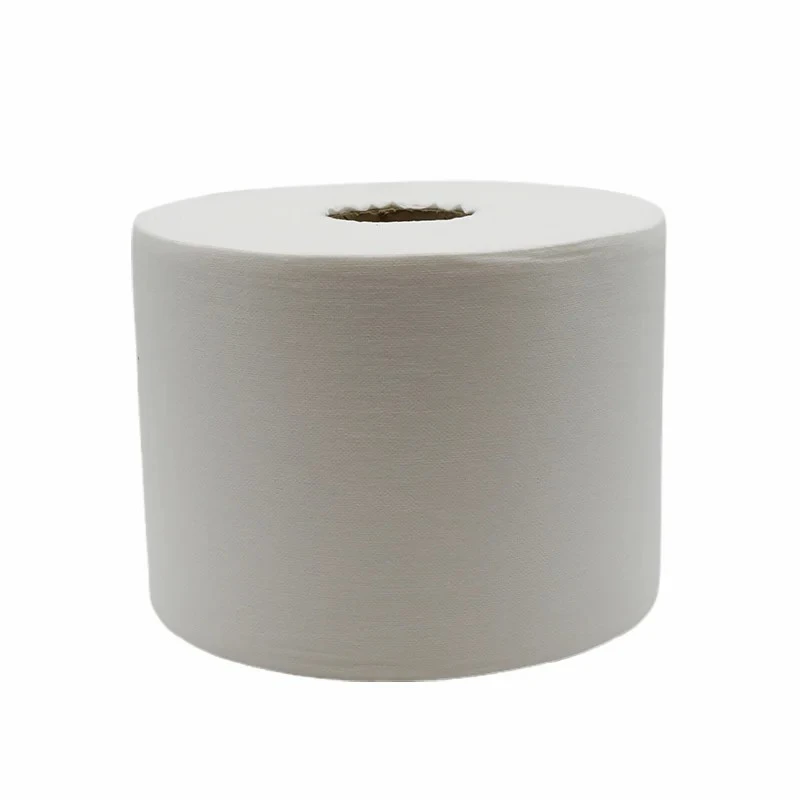
PP meltblown nonwoven fabric is a single-step web of polypropylene microfibres, formed when molten resin is blown by hot air onto a moving collector. Polypropylene brings low moisture regain, chemical resistance and a soft hand, making it the default choice for filtration and hygiene barrier layers.
The process creates a random, highly entangled fibre mat with pore sizes in the micron range but almost no straight-through path. Air passes, particles and droplets do not. Because the web is self-bonded, there is no chemical binder to extract or leach, which matters for medical and food-contact end uses.
Grades are tuned by melt flow index, air temperature and collector distance. Light weights from 15 to 30 gsm serve mask and barrier layers; 40 to 100 gsm serve absorption, oil containment and pleated filter media.
Key Advantages
Broad weight window A single qualified supplier can cover mask media, absorbent pads and pleated filter stock.
Hydrophobic by nature Polypropylene resists water penetration, which supports barrier performance without extra coating.
Chemical resistance Stable against most acids, bases and solvents encountered in industrial filtration.
Soft, low-lint surface Suitable for skin contact and for converting in clean environments.
Tunable pore structure Air permeability is set by process parameters rather than post-treatment, so performance does not wash out.
Cost-efficient media No binder, no carrier layer and no off-line finishing keep the per-square-metre cost low.
Applications
- Medical mask and respirator media
- HVAC and industrial pleated filters
- Oil absorbent pads and spill containment
- Hygiene barrier and backsheet layers
- Automotive cabin air filtration
- Wound care and protective packaging
FAQ
Q: What is the difference between PP meltblown and PP spunbond?
A: Meltblown uses hot air to draw fibres to one to five microns, giving dense filtration media. Spunbond uses rollers and produces continuous filaments of 15 to 30 microns, giving stronger but more open fabric.
Q: Can you supply flame retardant PP meltblown?
A: Yes, a halogen-free FR grade is available. It is normally specified for industrial filtration where spark exposure is a risk.
Q: Do you offer slit rolls for pleating machines?
A: We supply rolls from 50 mm wide with consistent edge quality, which reduces pleat height variation on high-speed lines.
Q: How is air permeability specified?
A: As litres per square metre per second at 200 Pa, measured on a Textest or equivalent instrument. Please state the target and tolerance you need.


