

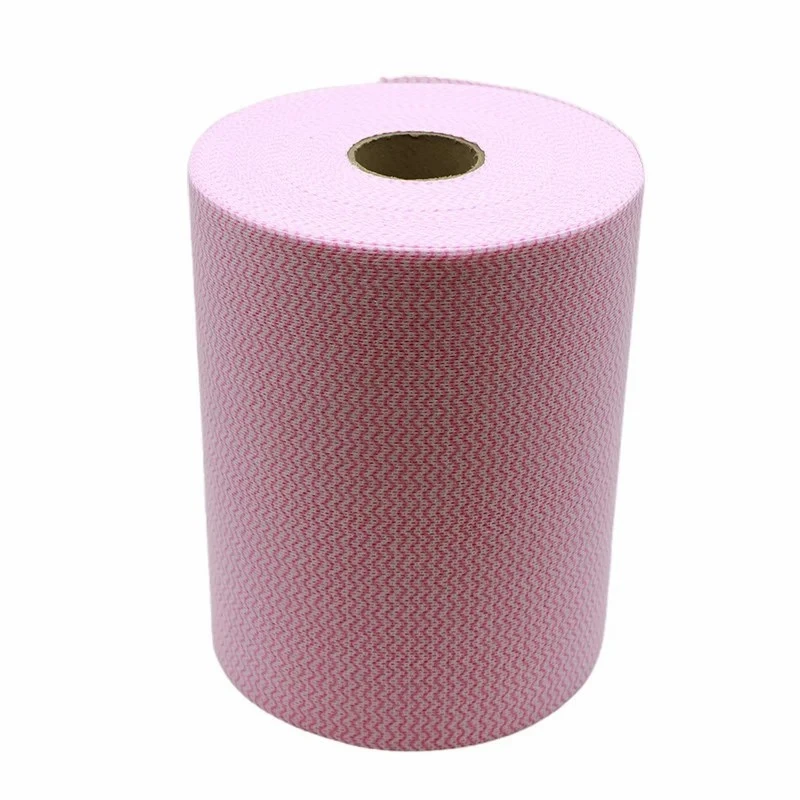
Hydrophilic spunbond nonwoven fabric is a continuous-filament polypropylene web that has been modified to let water pass and spread instead of beading. Standard spunbond is naturally hydrophobic, so the hydrophilic grade relies on a permanent wetting system built into the polymer or applied as a durable finish.
The performance metric that matters is strike-through time: how fast a liquid disappears from the surface. Fast strike-through keeps a diaper topsheet or an absorbent pad feeling dry, while controlled spreading feeds liquid into the absorbent core instead of letting it pool.
We tune the surfactant system to balance strike-through against run-off, so the fabric wets quickly without letting liquid run off the edge on high-speed converting lines. Grades are available with or without a durable, wash-resistant finish.
Key Advantages
Fast strike-through Liquid clears the surface in under three seconds on standard hygiene grades, keeping the skin-contact side dry.
Controlled run-off The wetting system is tuned so liquid penetrates rather than running off during high-speed conversion.
Permanent or temporary options Durable grades survive multiple insults; fugitive grades are used where hydrophilicity only matters during manufacture.
High strength-to-weight ratio Continuous filaments give tensile strength that light carded webs cannot reach at the same weight.
Low lint Filament structure sheds far less than short-staple alternatives, protecting converting equipment.
Breathable barrier balance Air passes while liquid is managed, avoiding the clammy feel of film laminates.
Applications
- Baby diaper and adult incontinence topsheet
- Feminine hygiene coverstock
- Absorbent pad and medical dressing facing
- Wet wipe and dry wipe substrate
- ADL acquisition and distribution layer
- Filtration and separation media requiring wettability
FAQ
Q: How is hydrophilicity measured?
A: Strike-through time is measured by EDANA WSP 70.3 or a comparable method, and run-off by WSP 80.3. We report both on the datasheet.
Q: Will the hydrophilic finish wash out?
A: Durable grades retain wetting after repeated exposure to liquid. If your process includes a washing or rinsing step, specify the durable option.
Q: What is the difference between hydrophilic spunbond and hydrophilic PP nonwoven?
A: They describe the same polymer family at different levels of specificity. Our spunbond line is the process-based grade; the PP page covers film and carded alternatives with equivalent wetting behaviour.
Q: Can you supply a three-layer SMS with hydrophilic outer layers?
A: Yes. We laminate spunbond, meltblown and spunbond in line and can make the skin-contact layer hydrophilic while keeping the outer layer hydrophobic.


