

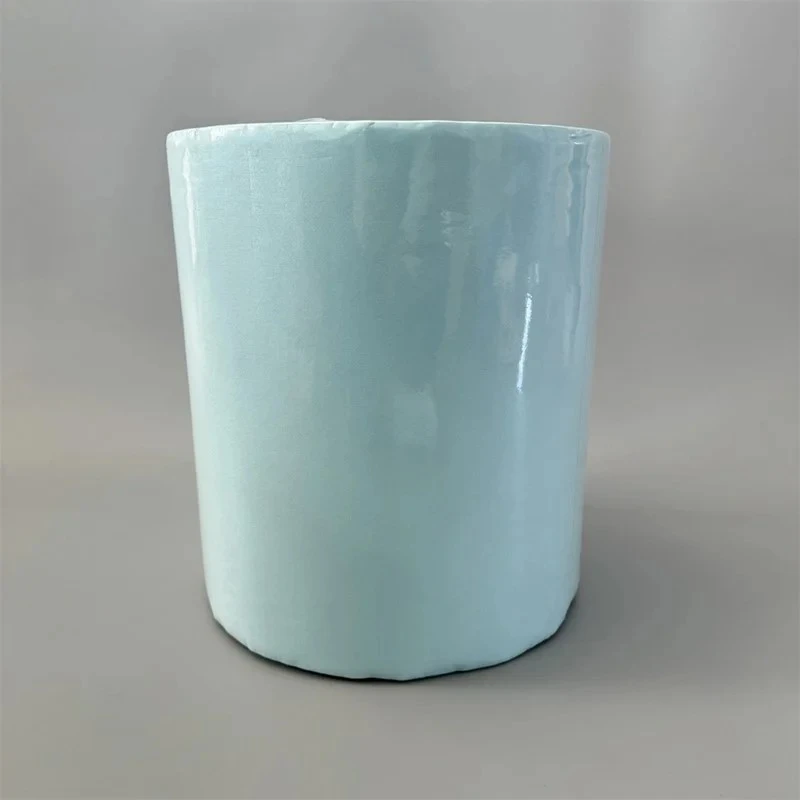
Polypropylene needle punched nonwoven fabric in the heavy duty range is built for construction, drainage and containment work where the fabric has to survive installation abuse. The needled entanglement gives thickness and puncture resistance that a thin spunbond cannot deliver, and polypropylene keeps working when wet.
Specification here is driven by mechanical properties rather than filtration: mass per unit area, tensile strength, CBR puncture resistance and elongation at break. Those are the figures engineers compare against a project specification, and they scale predictably with weight and needling density.
Typical programs run from 200 gsm separation layers to 600 gsm protection and cushioning pads. Rolls are supplied at 2 to 5 m width and up to 300 m length, with datasheets formatted for civil engineering submittals.
Key Advantages
Engineered for installation abuse High CBR puncture resistance protects the membrane or liner beneath during backfill.
Wet strength maintained Polypropylene does not absorb water, so mechanical properties hold in saturated ground.
Chemical and biological inertness Resists rot, mildew and the chemical attack found in landfill and drainage environments.
Heavy weight capability Up to 800 gsm from a single line, avoiding the need to laminate multiple layers.
Consistent mass per unit area Tolerance held within plus or minus five percent, which matters for payment by weight on civil projects.
Submittal-ready documentation Datasheets structured to civil engineering specification formats, with test methods named.
Applications
- Landfill and pond liner protection
- Subsurface drainage and filtration
- Highway and railway separation layers
- Erosion control and slope stabilization
- Industrial cushioning and equipment padding
- Tank farm and containment bund lining protection
FAQ
Q: Can you supply to a civil engineering specification?
A: Yes. Send the clause reference and required values for mass, tensile strength, CBR and elongation, and we will confirm compliance or propose the nearest grade.
Q: What roll size is standard for site delivery?
A: 2 m by 100 m is the common site unit. Wider and longer rolls are available but require handling equipment on site.
Q: How does it compare with polyester geotextile?
A: Polypropylene wins on chemical resistance and weight; polyester wins on temperature resistance and long-term UV exposure. For buried drainage work, either performs well.
Q: Do you provide third-party test reports?
A: Yes, on request for qualification lots, from an accredited laboratory testing to ISO or ASTM methods.


