

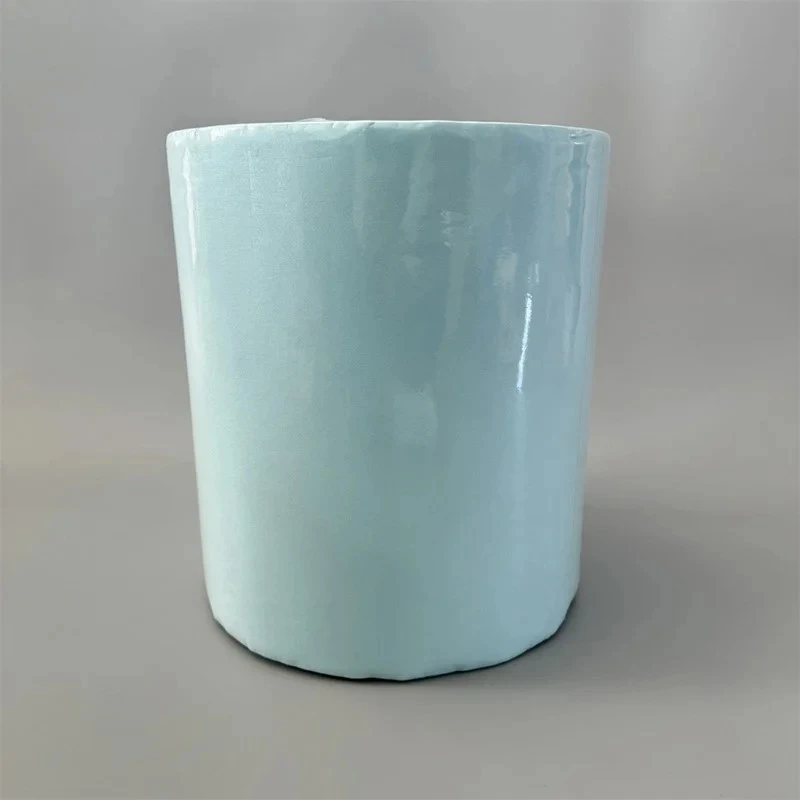
Antibacterial PP nonwoven fabric is polypropylene dosed with an antimicrobial additive so bacteria that land on the surface do not multiply. Polypropylene is already resistant to microbial attack as a material; the additive addresses surface contamination rather than material degradation.
Where this matters is in products that stay in contact with skin or moisture for hours: mattress ticking, footwear lining, reusable wipes, filter media in humid service. In those conditions a surface that does not support bacterial growth stays odour-free for longer.
We compound silver ion or zinc additive into the polymer at loadings calibrated to the target log reduction. Because the agent is distributed through the filament rather than coated on it, activity survives abrasion and moisture exposure, and cut edges remain protected.
Key Advantages
Activity through the thickness Additive is distributed in the polymer, so abrasion and cut edges do not expose untreated material.
Odour control Lower bacterial load means less odour development in humid, skin-contact service.
Non-leaching options Silver ion systems retain activity without releasing significant free silver.
Compatible with other finishes Can be combined with hydrophilic or hydrophobic treatment in one grade.
Verified performance Log reduction reported against a named standard for the exact grade supplied.
Broad product fit Suitable for spunbond, needle punched and meltblown constructions.
Applications
- Mattress ticking and bedding barrier
- Footwear lining and insole cover
- Reusable wipe and cleaning cloth
- Humid service filter media
- Automotive interior and seating layer
- Medical and care home textile component
FAQ
Q: Does antibacterial PP nonwoven kill bacteria or just inhibit growth?
A: It inhibits growth and reduces viable count on the surface. It is not a sterilant and should not be presented as one in product claims.
Q: Which log reduction can you guarantee?
A: Log 2 to log 3 as standard, log 4 with higher silver loading. The figure depends on the test method and contact time, which are stated in the report.
Q: Is the additive safe for skin contact?
A: Silver ion at typical loadings is used widely in skin-contact textiles. Cytotoxicity and skin irritation reports are available for your file.
Q: Can the fabric be recycled?
A: PP with silver additive can be mechanically recycled in polypropylene streams, though the additive may limit use in food contact recyclate.


